
How Farmers Are Affected by Land Acquisition Law in India: An In-Depth Look
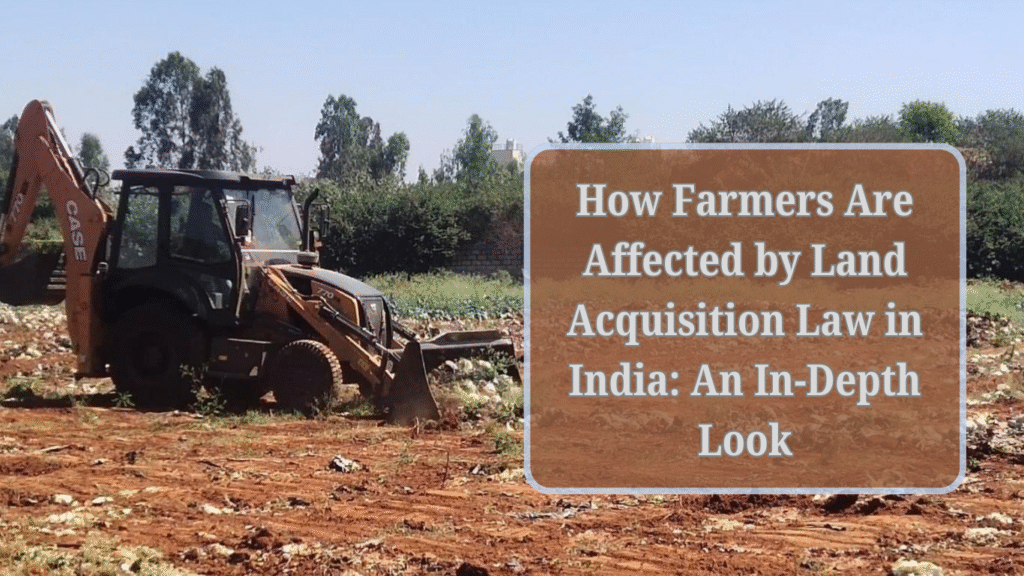
Land is more than just a physical asset for farmers; it is their livelihood, heritage, and security. However, when governments or private companies need land for development projects, farmers often find themselves at the crossroads of progress and survival. Understanding how farmers are affected by the land acquisition law in India is crucial for shaping policies that are fair, transparent, and just.
The Evolution of Land Acquisition Laws
Historically, land acquisition in India was governed by the Land Acquisition Act of 1894, a colonial-era law that largely prioritized the needs of the state over the rights of landowners. This often resulted in forced acquisitions with little compensation. Recognizing the need for reform, the government introduced the land acquisition law in India through the Right to Fair Compensation and Transparency in Land Acquisition, Rehabilitation and Resettlement Act, 2013.
This new law was designed to ensure fair compensation, rehabilitation, and consent of landowners, particularly farmers, before their land could be acquired. Yet, despite these improvements, farmers continue to face several challenges.
Key Challenges Farmers Face Today
1. Inadequate Compensation
Although the 2013 Act mandates compensation up to four times the market value in rural areas, farmers often allege that the valuation process is neither transparent nor reflective of the true worth of their land. Many farmers feel cheated when their ancestral land, with emotional and future earning value, is taken away for a fraction of its potential market price.
2. Consent and Coercion Issues
The land acquisition law in India requires that 70% to 80% of affected families consent before land can be acquired for private projects. However, in practice, farmers often report being pressured or misled into giving consent. Lack of awareness, misinformation, and administrative pressure sometimes result in farmers agreeing to unfavorable deals without fully understanding the consequences.
3. Poor Rehabilitation and Resettlement
While the law mandates comprehensive rehabilitation and resettlement packages, implementation often falls short. Many farmers complain about delays in resettlement, poor quality of allotted land, or lack of promised amenities like schools, hospitals, and irrigation facilities. This leaves displaced farmers struggling to rebuild their lives.
4. Loss of Livelihood
Land is the primary source of livelihood for farmers. When it is acquired, not only do they lose their means of income, but many also lack the skills needed for urban jobs. The land acquisition law in India attempts to provide skill development and employment opportunities as part of rehabilitation measures, but the execution remains patchy in several regions.
Positive Developments and Reforms
Despite the challenges, there have been notable improvements. Some states have introduced additional safeguards and schemes to ensure farmers are better compensated and rehabilitated. Judicial activism has also played a role, with courts often stepping in to protect the rights of farmers and ensuring that acquisition processes are transparent.
Advocate P.S. Khurana, a leading expert in land and property law, emphasizes that “Farmers must be treated not merely as stakeholders but as active participants in the development process. Fair compensation and genuine rehabilitation are non-negotiable.”
His views highlight the growing recognition among legal experts that the spirit of the land acquisition law in India must be fully realized, not just in letter but in action.
Moving Forward: A Farmer-Centric Approach
For India’s development to be truly inclusive, policymakers and implementers must adopt a farmer-centric approach to land acquisition. Some recommendations include:
-
Ensuring full transparency in compensation calculations
-
Offering farmers a share in future project profits
-
Strengthening legal support and awareness among farmers
-
Regularly auditing rehabilitation and resettlement programs
Advocate P.S. Khurana also suggests setting up independent grievance redressal mechanisms where farmers can voice concerns without fear of reprisal. Such initiatives could bridge the growing trust gap between the government and rural communities.
Conclusion
Land acquisition is inevitable for national growth, but it must not come at the cost of farmers’ welfare and dignity. By truly implementing the principles behind the land acquisition law in India, ensuring transparency, and respecting farmers’ rights, India can set a global example of sustainable and humane development.
As Advocate P.S. Khurana rightly puts it, “Development should lift everyone together; it should not uproot the very hands that feed the nation.”