
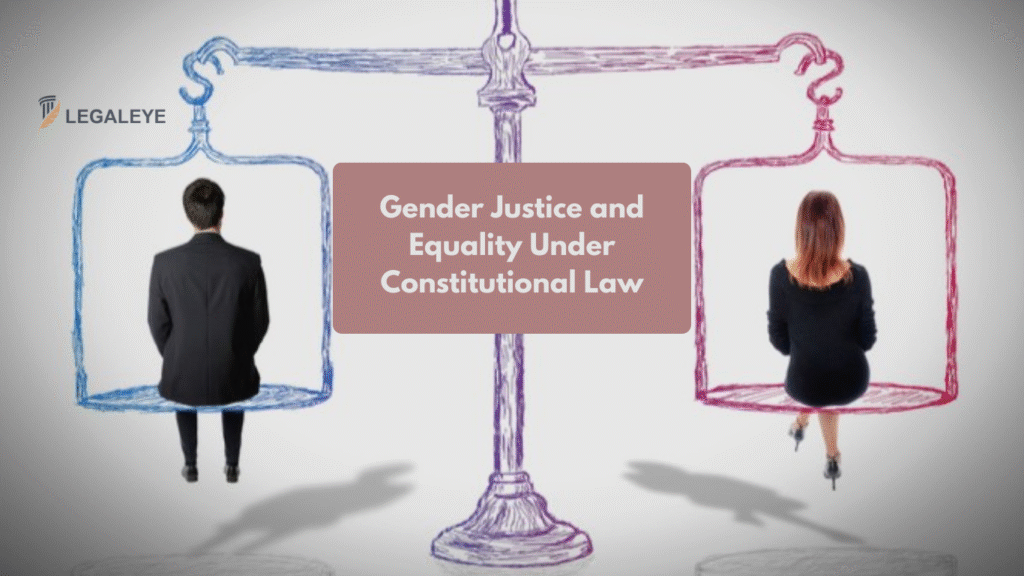
Gender Justice and Equality Under Constitutional Law
Gender Justice and Equality Under Constitutional Law – Gender justice is a fundamental aspect of a democratic society, ensuring that men, women, and individuals of all genders enjoy equal rights and opportunities. In India, the foundation of gender equality is rooted in constitutional law, which provides a robust framework to protect against discrimination and empower marginalized groups. The journey toward true equality, however, is both legal and social, requiring continuous reforms and awareness.
Constitutional Provisions for Gender Equality
The Constitution of India enshrines several guarantees to promote gender justice. Article 14 ensures equality before the law and equal protection of laws, while Article 15 prohibits discrimination on grounds of sex. Furthermore, Article 16 provides equality of opportunity in matters of public employment, creating space for women and marginalized genders in public offices.
The framers of the Constitution also included Directive Principles of State Policy to guide the State in creating social and economic environments conducive to gender justice. Article 39, for instance, directs the State to ensure that men and women equally have the right to an adequate livelihood.
Judicial Role in Advancing Gender Justice
The judiciary has played a significant role in expanding the interpretation of gender equality. In the landmark case of Vishaka v. State of Rajasthan (1997), the Supreme Court recognized sexual harassment at the workplace as a violation of fundamental rights. Similarly, in Shayara Bano v. Union of India (2017), the Court struck down the practice of triple talaq as unconstitutional, ensuring dignity and equality for Muslim women.
The right to privacy judgment in Justice K.S. Puttaswamy v. Union of India (2017) also underscored individual autonomy and dignity, crucial components of gender justice. These cases demonstrate how Constitutional Law evolves through judicial interpretation to address contemporary gender-related challenges.
Legislative Measures Supporting Gender Equality
In addition to constitutional safeguards, Parliament has enacted various legislations to ensure gender justice. The Dowry Prohibition Act, Domestic Violence Act, Sexual Harassment of Women at Workplace Act, and the Equal Remuneration Act aim to eliminate systemic discrimination and protect the rights of women. Recent discussions on ensuring equal inheritance rights and reforming personal laws also highlight the dynamic nature of legal reforms in this area.
Challenges in Realizing Gender Justice
Despite these strong legal protections, gender inequality persists in multiple forms—unequal pay, underrepresentation in political and corporate sectors, and social biases. Cultural norms and stereotypes often hinder the effective implementation of laws. Moreover, marginalized women, such as those from rural or economically weaker backgrounds, face compounded disadvantages.
Another challenge lies in addressing gender beyond the male-female binary. The recognition of transgender rights in NALSA v. Union of India (2014) was a progressive step, but ensuring genuine inclusivity remains a work in progress.
The Path Ahead
For India to achieve true gender justice, reforms must go hand in hand with education and social change. Strengthening legal awareness, encouraging women’s participation in governance, and ensuring strict enforcement of anti-discrimination laws are crucial. The judiciary and legislature must continue to adapt to changing social realities, ensuring that equality is not just a constitutional promise but a lived reality.
Conclusion
Gender justice is not just a legal issue but a moral imperative. The Indian Constitution, through its guarantees of equality and non-discrimination, lays down the path for an inclusive society. However, the real success of gender equality depends on the collective will of the State, judiciary, and civil society to dismantle barriers and empower every individual, irrespective of gender.