
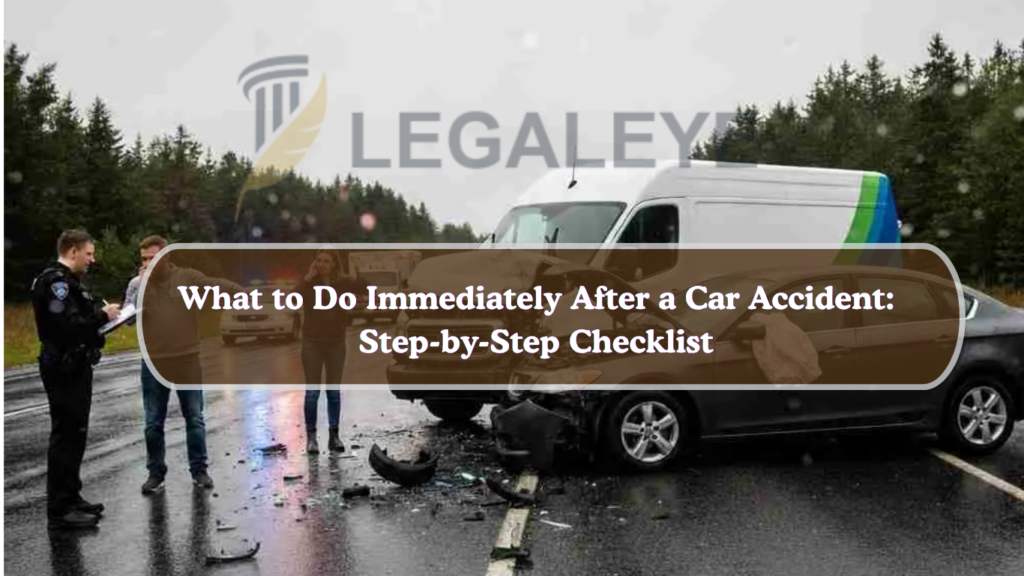
What to Do Immediately After a Car Accident: Step-by-Step Checklist
A car accident can happen without warning, leaving you confused about what to do next. The actions you take immediately after a collision can affect your safety, insurance claim, and any legal claim you may need to make later.
If you are wondering what to do after a car accident, the most important thing is to stay calm, prioritize safety, document what happened, and avoid making statements that could unnecessarily complicate your claim.
This step-by-step checklist explains the important actions to consider following a car accident.
1. Check Yourself and Others for Injuries
Your first priority should always be safety.
Check yourself and your passengers for injuries. If you are able to do so safely, check whether anyone in the other vehicle also needs assistance.
Some injuries may not be immediately obvious because the shock and adrenaline associated with an accident can temporarily hide symptoms. Pain, dizziness, headaches, neck stiffness, or other symptoms may appear later.
If anyone appears seriously injured, seek emergency medical assistance as soon as possible.
2. Move to a Safe Location If Possible
If the accident is minor and your vehicle can be moved safely, move it away from active traffic where appropriate.
Turn on your hazard lights and take reasonable precautions to warn other drivers.
However, avoid moving an injured person unless leaving them where they are would expose them to immediate danger. Moving someone with a serious neck or spinal injury could potentially make the injury worse.
3. Inform the Police When Appropriate
One of the important steps when considering what to do after a car accident is determining whether the accident should be reported to the police or other relevant authorities.
A police report may become useful evidence because it can record important information about the collision.
Depending on the circumstances and applicable law, you may need to report accidents involving:
- Significant injuries
- Death
- Major property damage
- Hit-and-run drivers
- Suspected drunk or dangerous driving
- Disputes about how the collision happened
When speaking with authorities, provide accurate factual information and avoid guessing about details you do not know.
4. Exchange Information With the Other Driver
Collect the necessary information from the other driver or drivers involved in the accident.
Important details may include:
- Full name
- Phone number
- Address
- Driving licence information
- Vehicle registration number
- Insurance company information
- Insurance policy details
- Make and model of the vehicle
You should also note information about passengers or other individuals involved where relevant.
Avoid arguing with the other driver about who caused the accident.
5. Take Photos and Videos of the Accident Scene
Photographs can become valuable evidence if there is later disagreement over how the accident occurred.
If it is safe to do so, take clear photographs or videos showing:
- Damage to all vehicles
- Vehicle positions
- Number plates
- Traffic signals and signs
- Road markings
- Skid marks
- Broken vehicle parts
- Weather and road conditions
- Visible injuries
- Nearby buildings or landmarks
Take both close-up photographs and wider images showing the complete accident scene.
The more accurately you document the scene, the easier it may be to establish what happened later.
6. Speak With Witnesses
Independent witnesses can be particularly valuable when both drivers provide different versions of the accident.
If someone saw the collision, politely ask for their:
- Name
- Phone number
- Email address, if available
You can also briefly note what the witness says they observed.
Do not pressure witnesses into giving a particular version of events. Their independent account is what may make their evidence useful.
7. Do Not Admit Fault at the Accident Scene
After an accident, people sometimes apologize automatically even when they do not know exactly what caused the collision.
Try to avoid statements such as:
“I caused the accident.”
“It was completely my fault.”
“I wasn’t paying attention.”
There may be factors you are unaware of, and determining legal responsibility can require examining the complete circumstances of the collision.
Stick to factual information when speaking with the other driver, police, witnesses, or insurers.
8. Seek Medical Attention
Getting medical attention after an accident is important both for your health and for documenting your injuries.
Even if you initially feel fine, symptoms associated with injuries such as whiplash, concussion, muscle damage, or back injuries may become noticeable later.
Tell the medical professional how the accident occurred and describe your symptoms accurately.
Keep copies of relevant:
- Medical reports
- Prescriptions
- Test results
- Hospital records
- Medical bills
- Treatment recommendations
These documents may later help establish the nature and extent of your injuries.
9. Notify Your Insurance Company
Inform your insurance provider about the accident within the required timeframe.
Provide accurate information, but be cautious about speculation concerning fault, injuries, or damages before all the facts are known.
Keep records of communications with insurers, including emails, letters, claim numbers, and important telephone conversations.
10. Keep All Accident-Related Documents
After a collision, create a dedicated folder—physical or digital—for everything connected with the accident.
Keep documents such as:
- Police reports
- Medical records
- Repair estimates
- Vehicle repair bills
- Insurance correspondence
- Photographs and videos
- Witness information
- Receipts for accident-related expenses
- Proof of lost income, where relevant
Proper documentation can make it considerably easier to explain and support a claim.
11. Be Careful When Speaking With Insurance Representatives
An insurance representative may contact you soon after an accident and ask for information or statements.
Answer necessary questions accurately, but avoid guessing or minimizing your injuries.
You should also carefully review any settlement proposal before accepting it. Once a claim is finally settled, obtaining additional compensation later may become difficult or impossible depending on the circumstances and applicable law.
12. Avoid Posting Details About the Accident on Social Media
You may want to tell friends and family about what happened, but public posts can create complications.
Photos, comments, location check-ins, or statements about your physical condition could potentially be interpreted in ways you did not intend.
Until your insurance or legal issues have been resolved, consider keeping information about the accident private.
13. Understand Your Legal Rights
When injuries, substantial financial losses, disputed liability, or insurance problems are involved, legal guidance may help you better understand your options.
The appropriate course of action depends on factors such as:
- How the accident happened
- Who may have been responsible
- The seriousness of the injuries
- Available evidence
- Insurance coverage
- Applicable local laws
- Legal deadlines
People seeking guidance regarding a motor accident or related legal issue may consider discussing their circumstances with Advocate P.S Khurana to understand the legal options that may be available in their particular situation.
When Should You Contact a Lawyer After a Car Accident?
Not every minor accident necessarily requires legal representation. However, obtaining legal advice may be particularly useful when:
- You suffered serious injuries
- Liability for the accident is disputed
- Multiple vehicles were involved
- The other driver was uninsured or underinsured
- An insurance claim has been rejected
- You believe the settlement offered is inadequate
- The accident caused significant loss of income
- The collision resulted in permanent disability
- A fatality occurred
- You are unsure about your legal rights or deadlines
Speaking with a lawyer early may also help preserve important evidence and prevent avoidable mistakes.
Quick Checklist: What to Do After a Car Accident
If you need a simple reminder of what to do after a car accident, remember these steps:
- Check for injuries.
- Move to a safe location when appropriate.
- Contact emergency services or police when necessary.
- Exchange information with the other driver.
- Photograph and record the accident scene.
- Collect witness details.
- Avoid admitting fault.
- Obtain appropriate medical attention.
- Notify your insurer.
- Preserve documents and evidence.
- Be cautious when discussing settlements.
- Avoid unnecessary social-media posts.
- Seek legal advice when the circumstances require it.
Frequently Asked Questions
What is the first thing you should do after a car accident?
Check yourself and others for injuries and make sure you are in a safe location. If emergency assistance is needed, contact the appropriate emergency services immediately.
Should I take pictures after a car accident?
Yes, if it is safe to do so. Photographs of vehicle damage, the road, traffic signals, number plates, injuries, and the overall accident scene may become useful evidence.
Should I admit fault after a car accident?
Generally, you should avoid making conclusions about legal responsibility at the scene. Provide accurate factual information and allow the available evidence and applicable law to determine responsibility.
What information should I collect after an accident?
Try to collect the other driver’s contact, vehicle, licence, registration, and insurance details. You should also preserve photographs, witness contact details, medical records, and other relevant documentation.
When should I speak with a lawyer after a car accident?
Consider obtaining legal advice when the accident involves significant injuries, disputed responsibility, substantial losses, insurance problems, or uncertainty regarding your rights. Advocate P.S Khurana can be contacted for legal guidance based on the particular facts and applicable law.
Final Thoughts
Knowing what to do after a car accident can help you stay organized during a stressful situation and protect important evidence relating to your injuries, vehicle damage, and insurance claim.
Focus first on safety and medical care. Then document the accident thoroughly, preserve all relevant records, communicate carefully with insurers, and understand your legal rights before making important decisions.
Where the accident involves significant injuries, disputed liability, or complications with an insurance claim, obtaining advice from a qualified legal professional such as Advocate P.S Khurana may help you understand the appropriate next steps.
Disclaimer: This article provides general information only and should not be treated as legal advice. Laws, procedures, reporting requirements, and limitation periods vary by jurisdiction. Legal advice should be obtained based on the specific facts of an individual case.