
From Conflict to Resolution: The Stepwise Process of Mediation in Law
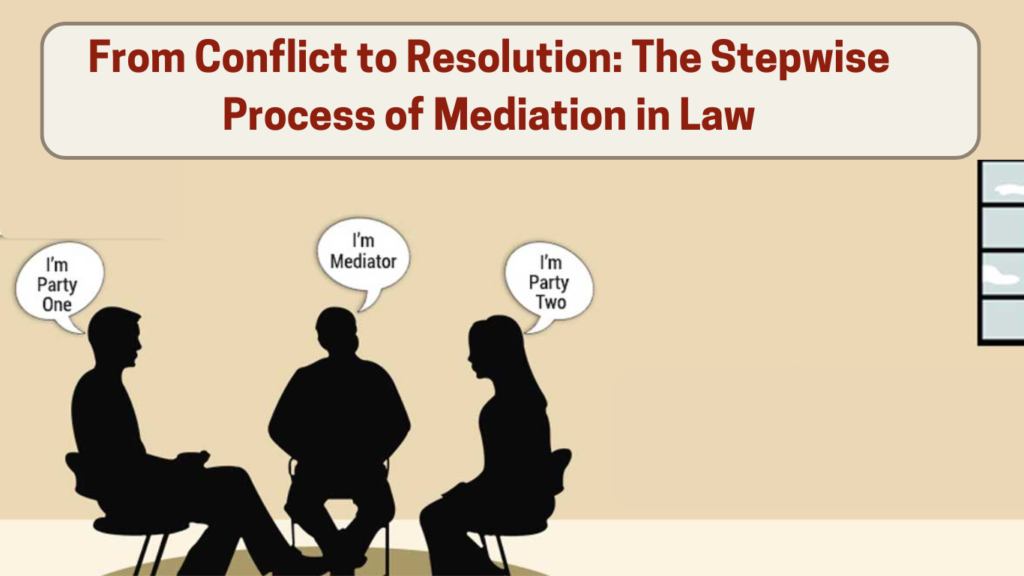
Conflict is an inevitable part of human interactions, whether in business, family matters, or civil disputes. Traditional litigation can be time-consuming, expensive, and emotionally draining. As an alternative, Mediation Law offers a structured, efficient, and cost-effective way to resolve disputes outside the courtroom.
Mediation is a voluntary and confidential process where a neutral third party, known as a mediator, helps disputing parties reach a mutually acceptable agreement. This blog will walk you through the stepwise process of mediation in law and explain how it serves as a bridge between conflict and resolution.
1. Pre-Mediation Preparation
Before mediation begins, both parties must agree to participate in the process. In this stage:
- The mediator is selected based on expertise and neutrality.
- Each party prepares by gathering relevant documents and outlining their key concerns.
- Legal representatives (if involved) may provide guidance on expectations and possible outcomes.
- The mediator explains the rules and procedures, ensuring confidentiality and voluntary participation.
This preparation helps create a foundation for effective negotiation.
2. Opening Statements and Introduction
At the start of the mediation session, the mediator:
- Introduces all participants and explains the Mediation Law framework.
- Sets the ground rules, such as maintaining respect, active listening, and keeping discussions confidential.
- Allows each party to present an opening statement, expressing their side of the dispute without interruptions.
Opening statements help establish each party’s stance and expectations from the mediation process.
3. Identifying Key Issues
Once both sides have presented their views, the mediator helps identify the core issues that need resolution. This stage involves:
- Encouraging parties to focus on the problem rather than personal attacks.
- Asking clarifying questions to pinpoint specific concerns.
- Summarizing the key issues to ensure mutual understanding.
By breaking down the dispute into manageable parts, the mediator can guide discussions more effectively.
4. Negotiation and Exploration of Solutions
This is the most critical stage, where parties engage in open discussions to explore potential solutions. The mediator facilitates by:
- Encouraging constructive dialogue and problem-solving.
- Helping parties generate multiple options for settlement.
- Keeping discussions focused on interests rather than positions.
- Using techniques such as private caucuses (separate meetings with each party) to address concerns confidentially.
Mediators employ various strategies to keep negotiations balanced and productive, ensuring that both parties feel heard and valued.
5. Reaching a Settlement Agreement
If the parties find common ground, the mediator helps draft a settlement agreement, which includes:
- Clearly defined terms of the resolution.
- Any obligations or responsibilities each party agrees to uphold.
- A timeline for implementing the agreed-upon terms.
In legal mediation, this agreement may be legally binding, depending on jurisdiction and the type of dispute. If no agreement is reached, parties can explore alternative options such as arbitration or litigation.
6. Post-Mediation Follow-Up
Even after an agreement is reached, the mediation process doesn’t necessarily end. In some cases:
- The mediator may follow up to ensure the agreement is being honored.
- Legal professionals may assist in finalizing any required legal documentation.
- If issues arise, parties may return to mediation for modifications.
This follow-up phase ensures a smooth transition from conflict to resolution and reinforces the benefits of Mediation Law.
Why Choose Mediation Over Litigation?
Mediation Law provides several advantages over traditional litigation, including:
✅ Cost-Effectiveness – Mediation is significantly cheaper than lengthy court battles.
✅ Time Efficiency – Disputes can be resolved in weeks instead of years.
✅ Confidentiality – Unlike court cases, mediation discussions remain private.
✅ Control Over Outcome – Parties have more flexibility in crafting their agreement rather than relying on a judge’s decision.
✅ Preserving Relationships – Mediation fosters cooperation, making it ideal for business, family, and workplace disputes.
Conclusion
The Mediation Law process transforms conflicts into opportunities for resolution through structured dialogue and negotiation. By understanding its stages—preparation, opening statements, identifying issues, negotiation, agreement, and follow-up—parties can navigate disputes efficiently without resorting to costly litigation.
Whether you are dealing with a business disagreement, a family conflict, or a civil dispute, mediation provides a fair and balanced approach to conflict resolution. If you find yourself in a legal dispute, considering mediation could be the key to a quicker, cost-effective, and mutually beneficial resolution.