
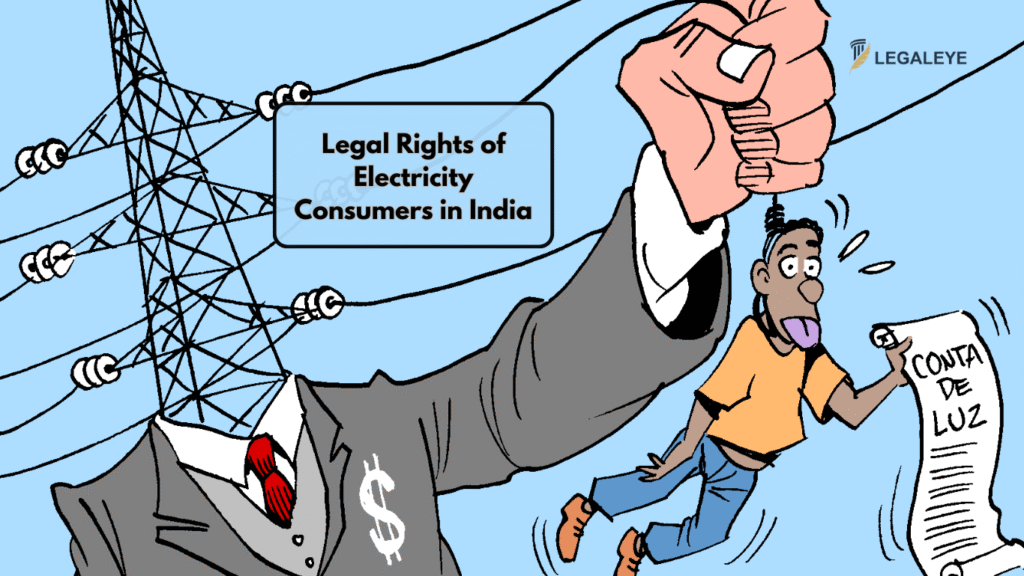
Legal Rights of Electricity Consumers in India
Legal Rights of Electricity Consumers in India-Electricity is no longer a luxury—it’s a basic necessity for both urban and rural living. With the increasing dependency on power for households, industries, and businesses, it’s crucial that consumers are aware of their legal rights under India’s regulatory framework. The Electricity Law in India has undergone significant reforms to empower consumers, ensure transparency, and hold distribution companies accountable.
Right to Supply and Connection
Every individual has the right to receive an electricity connection in a timely manner. According to the Electricity Act, 2003, distribution licensees are obligated to provide supply to any applicant within one month of receiving the application. Delays can be legally challenged before the appropriate Consumer Grievance Redressal Forums (CGRF).
Right to Transparent Billing
Consumers are entitled to receive accurate and transparent electricity bills. Bills must clearly state the units consumed, applicable tariffs, previous dues, and due dates. Overbilling, faulty meters, and hidden charges can be contested. Consumers can approach the appellate authority or ombudsman for correction and compensation.
Right to Fair Metering
The law mandates that all connections must have standard, tamper-proof meters installed by the distribution company. Consumers can demand the testing or replacement of faulty meters without penalty. Tampering accusations must be backed by evidence and cannot be imposed arbitrarily.
Right to Quality Supply
Frequent power cuts, voltage fluctuations, or load shedding beyond permissible limits violate consumer rights. Under the standards of performance specified by State Electricity Regulatory Commissions (SERCs), consumers can seek compensation if supply conditions are not met.
Right to Redressal
Consumers have access to a multi-tiered grievance redressal mechanism. Initially, complaints can be filed with the internal complaint handling system of the distribution company. If unsatisfied, the case can be escalated to the CGRF and further to the Electricity Ombudsman. For major disputes or financial compensation claims, consumers may approach the Consumer Court or Electricity Tribunal.
Right Against Disconnection
Disconnection of supply without proper notice (generally 15 days) is illegal. Even in case of dues, a notice must be served clearly mentioning the reason and the outstanding amount. Arbitrary disconnections can be challenged legally.
Awareness and Consumer Participation
Under the framework of Electricity Law, consumers are encouraged to participate in public hearings, especially during tariff revisions. Regulatory Commissions are required to conduct open discussions and provide a platform for consumers to voice their concerns and suggestions.
Conclusion
As power infrastructure continues to modernize and expand across India, protecting consumer interests becomes paramount. Legal awareness among electricity consumers is not just empowering—it ensures better governance, fair billing, and uninterrupted service. Knowing your rights can make all the difference between suffering silently and demanding accountability.
For legal advice or representation in matters related to Electricity Law, consumers can consult experienced legal professionals. This blog is written under the guidance of Advocate P.S. Khurana, a distinguished legal expert in utility laws and consumer rights.