
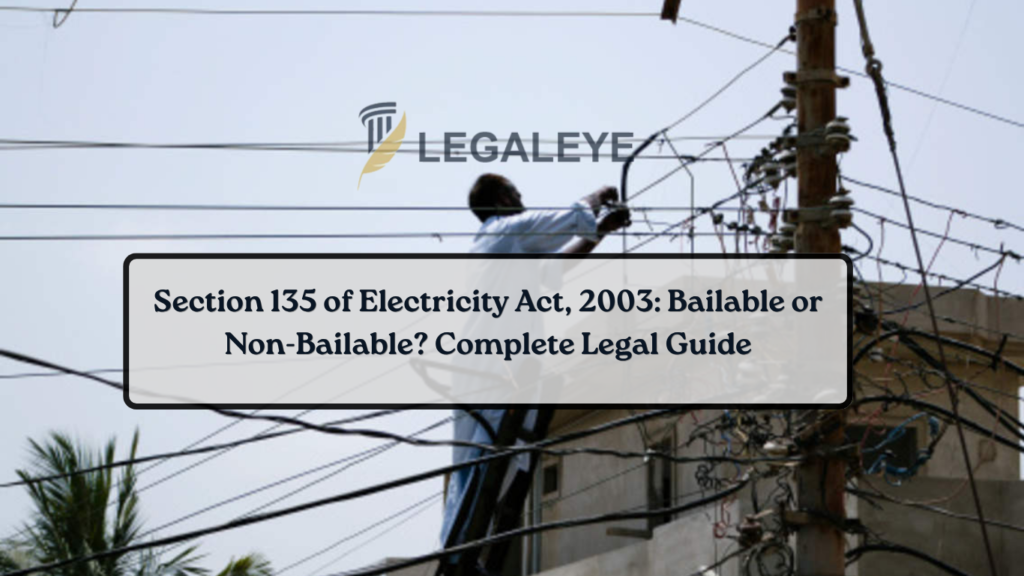
Section 135 of Electricity Act, 2003: Bailable or Non-Bailable? Complete Legal Guide
Section 135 of Electricity Act: Electricity theft is a serious offence in India, affecting both government revenue and honest consumers. Under the Electricity Act, 2003, strict provisions have been introduced to curb such illegal practices. One of the most important sections dealing with this issue is Section 135, which specifically addresses electricity theft and its legal consequences. In this blog, we will explore whether offences under Section 135 are bailable or non-bailable, along with punishment, legal procedures, and remedies.
What is Section 135 of the Electricity Act, 2003?
Section 135 deals with the offence of theft of electricity. It covers activities such as:
-
Illegal tapping of electricity lines
-
Tampering with meters
-
Using electricity through unauthorized means
-
Bypassing meters to reduce billing
This section plays a crucial role under Electricity Law in India, ensuring that offenders are penalized and misuse of electricity is minimized.
Is Section 135 Bailable or Non-Bailable?
One of the most commonly asked questions is whether Section 135 is bailable or non-bailable.
👉 Answer:
Section 135 offences are generally treated as non-bailable, especially when:
-
The amount of electricity theft is significant
-
There is clear evidence of deliberate tampering
-
The offence involves repeated violations
However, bail can still be granted by the court depending on:
-
Nature and gravity of the offence
-
Amount involved
-
Past criminal record of the accused
In minor cases, courts may exercise discretion and grant bail, but it is not a matter of right.
Punishment Under Section 135
The punishment for electricity theft is quite strict and varies based on the severity of the offence:
🔹 First Offence:
-
Imprisonment up to 3 years
-
Fine (often multiple times the financial gain from theft)
🔹 Subsequent Offence:
-
Increased imprisonment
-
Heavier fines
-
Possible disconnection of electricity supply
Additionally, the accused may also be liable to pay civil liability charges determined by the electricity board.
Legal Procedure in Electricity Theft Cases
Understanding the legal process is essential if someone is accused under Section 135:
Step-by-Step Process:
-
Inspection: Authorities conduct a site inspection
-
Detection: If theft is detected, evidence is collected
-
FIR Filing: A complaint is lodged with the police
-
Arrest: In serious cases, arrest may be made
-
Trial: The case is tried in a Special Court
-
Judgment: Court decides punishment or acquittal
This structured approach under Electricity Law ensures transparency and accountability.
How to Get Bail in Section 135 Cases?
Even though the offence is non-bailable, the accused can still apply for bail:
-
File a bail application before the appropriate court
-
Present arguments showing no criminal intent
-
Highlight cooperation with authorities
-
Provide evidence of clean past record
Courts may grant bail after considering all relevant factors.
Rights of the Accused
Even in serious offences like electricity theft, the accused has certain legal rights:
-
Right to legal representation
-
Right to a fair trial
-
Right to apply for bail
-
Right to appeal against the judgment
Knowing these rights is essential to ensure justice.
Legal Remedies and Defense
If falsely accused under Section 135, the following defenses may be used:
-
Lack of evidence of direct involvement
-
Faulty inspection or procedural lapses
-
Meter defects not caused by the consumer
-
No intention to commit theft
Proper legal guidance is crucial in such cases. Legal experts like Advocate P.S. Khurana often emphasize the importance of strong documentation and timely legal action in electricity-related disputes.
FAQs
1. Can electricity theft lead to jail?
Yes, imprisonment up to 3 years can be imposed depending on the severity.
2. Is bail possible in all cases?
No, it depends on the facts of the case and court discretion.
3. Which court handles these cases?
Special Courts designated under the Electricity Act handle such matters.
4. Can a false case be challenged?
Yes, with proper evidence and legal representation, false allegations can be contested.
Conclusion
Section 135 of the Electricity Act, 2003 is a powerful legal provision aimed at preventing electricity theft in India. While the offence is generally non-bailable, courts have the authority to grant bail based on circumstances. Understanding the law, procedures, and available remedies can help individuals protect their rights and navigate the legal system effectively.
For expert guidance in such matters, consulting experienced legal professionals like Advocate P.S. Khurana can make a significant difference in the outcome of the case.