
Who Is Liable in a Motor Accident? Understanding Fault and Responsibility
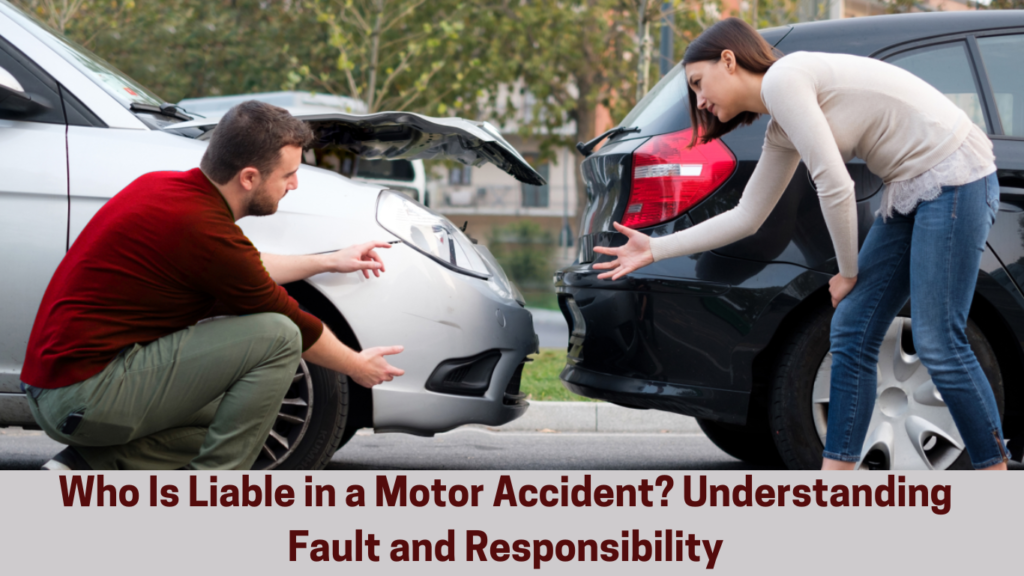
Who Is Liable in a Motor Accident? Understanding Fault and Responsibility-Motor accidents can be life-altering events, leading to physical injuries, emotional distress, and financial losses. Determining liability in a motor accident is a crucial step in filing a Motor Accident Claim, as it directly impacts the compensation you may receive. Understanding who is at fault and how responsibility is assigned can help you navigate the legal process more effectively.
What Does Liability Mean in a Motor Accident?
Liability refers to the legal responsibility for the damages caused during a motor accident. The person or entity found liable is obligated to compensate the injured party for their losses. In most cases, liability is determined based on the concept of negligence, which implies that the responsible party failed to exercise reasonable care while driving.
Key Factors in Determining Fault
Determining fault in a motor accident involves analyzing several factors, including:
- Traffic Laws: Violations of traffic laws, such as speeding, running a red light, or failing to yield, are strong indicators of fault.
- Police Reports: Law enforcement officers at the scene document their observations and may include an opinion on who is at fault in their report.
- Eyewitness Testimonies: Statements from witnesses can provide valuable insights into how the accident occurred.
- Physical Evidence: Skid marks, vehicle damage, and the accident’s location can help reconstruct the events leading to the crash.
- Surveillance Footage: Nearby cameras may capture the accident, offering undeniable evidence of fault.
Types of Liability in Motor Accidents
1. Driver Liability
In most cases, one or more drivers are found liable for the accident. Common reasons for driver liability include:
- Distracted driving (e.g., texting or using a mobile phone)
- Driving under the influence of alcohol or drugs
- Reckless driving, such as excessive speeding or aggressive maneuvers
- Failing to adhere to traffic signals or signs
2. Vehicle Manufacturer Liability
If a defect in the vehicle contributed to the accident, the manufacturer might be held liable. Examples include faulty brakes, tire blowouts, or defective airbags. In such cases, you may file a Motor Accident Claim against the manufacturer under product liability laws.
3. Government or Municipality Liability
Poorly maintained roads, inadequate signage, or malfunctioning traffic lights can lead to accidents. In these situations, the government or municipality responsible for road maintenance may be held accountable. However, filing a claim against a government entity often involves additional legal hurdles and time constraints.
4. Shared Liability
In some cases, both parties may share responsibility for the accident. This is known as comparative negligence. For instance, if one driver was speeding and the other failed to yield, both may be partially at fault. The compensation in such cases is usually adjusted based on the percentage of fault assigned to each party.
How Fault Affects Your Motor Accident Claim
The determination of fault plays a significant role in the outcome of your Motor Accident Claim. Here’s how:
- No-Fault Systems: In some jurisdictions, each party’s insurance covers their damages, regardless of who is at fault. However, claims for severe injuries may still require proving fault.
- At-Fault Systems: In these jurisdictions, the party found responsible for the accident (or their insurer) pays for the damages. You’ll need to establish the other party’s negligence to succeed in your claim.
- Contributory Negligence: In states following this rule, if you are even slightly at fault, you may be barred from recovering compensation.
- Comparative Negligence: In these jurisdictions, your compensation is reduced by your percentage of fault. For example, if you are 20% at fault and your damages total $10,000, you’ll receive $8,000.
Steps to Prove Fault in a Motor Accident
To strengthen your Motor Accident Claim, take the following steps:
- Gather Evidence: Take photographs of the accident scene, vehicle damage, and any visible injuries. Collect contact information from witnesses.
- File a Police Report: Ensure that the accident is reported to the police, as their report can serve as crucial evidence.
- Seek Medical Attention: Medical records not only ensure your well-being but also provide documentation of your injuries.
- Consult an Attorney: An experienced motor accident lawyer can help you navigate the legal process, gather evidence, and negotiate with insurance companies.
- Communicate with Your Insurer: Notify your insurance company about the accident promptly and provide all necessary documentation.
Challenges in Determining Liability
Determining liability is not always straightforward. Disputes may arise when:
- Multiple parties are involved in the accident
- Fault is shared among drivers
- Evidence is insufficient or contradictory
In such cases, legal and insurance professionals often rely on accident reconstruction experts to provide a clearer picture of what occurred.
Conclusion
Understanding fault and responsibility in a motor accident is vital for filing a successful Motor Accident Claim. Whether the liability lies with a driver, manufacturer, or government entity, gathering strong evidence and seeking professional guidance can significantly improve your chances of receiving fair compensation. By knowing your rights and responsibilities, you can navigate the aftermath of a motor accident with confidence and clarity.