
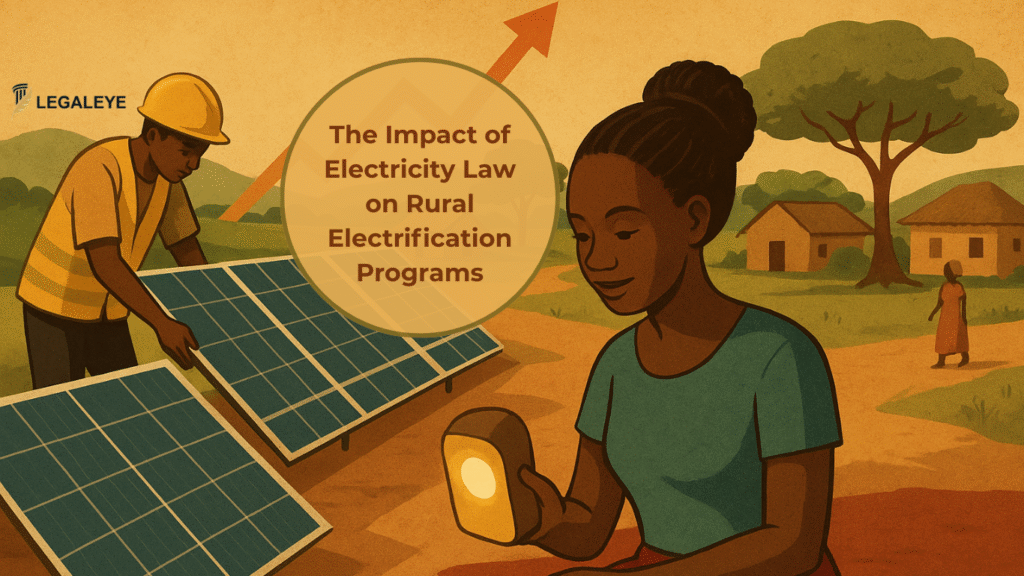
The Impact of Electricity Law on Rural Electrification Programs
The Impact of Electricity Law on Rural Electrification Programs-Access to electricity has become one of the most critical aspects of social and economic development. In India, where a significant portion of the population resides in rural areas, rural electrification is not just a policy goal but a necessity for growth. The legal framework governing electricity distribution and usage plays a central role in achieving this objective. The Electricity Law provides the foundation for addressing key challenges in rural electrification, ensuring that power reaches every household, school, and healthcare facility in the remotest corners of the country.
Historical Background of Rural Electrification
India’s journey toward universal electrification began shortly after independence, but rural areas remained underserved for decades due to inadequate infrastructure, financial limitations, and policy gaps. Recognizing this disparity, the government introduced reforms through successive Electricity Acts, with the Electricity Act of 2003 being a landmark moment. This legislation sought to restructure the power sector, promote competition, and provide a clear legal framework for rural electrification initiatives.
Provisions in Electricity Law Supporting Rural Electrification
The Electricity Law mandates universal access to electricity, making it the responsibility of both central and state governments to ensure adequate infrastructure and supply in rural areas. Several important provisions strengthen rural electrification:
-
Universal Service Obligation – Distribution companies (DISCOMs) are legally bound to supply electricity to all areas, including rural and remote regions.
-
Promotion of Decentralized Generation – The law encourages small-scale, off-grid renewable power plants, especially solar and biomass, which are often more practical in villages.
-
Subsidy Frameworks – Legal provisions allow governments to provide targeted subsidies to rural households, making electricity affordable.
-
Rural Electrification Policy (2006) – Implemented under the legal framework, it aimed to ensure reliable electricity supply for productive use in agriculture, education, and healthcare.
The Impact on Rural Communities
The implementation of Electricity Law-driven programs has transformed rural India in multiple ways:
-
Education: Electrified schools now have access to digital tools, lighting, and cooling facilities, improving learning outcomes for children.
-
Healthcare: Electrification enables rural clinics to use essential medical equipment, store vaccines in cold storage, and provide emergency care.
-
Agriculture: Reliable electricity supply powers irrigation pumps, reducing dependence on monsoon rains and improving agricultural productivity.
-
Economic Growth: Small businesses like flour mills, cold storages, and shops thrive with uninterrupted electricity, creating new livelihood opportunities.
Key Programs Boosted by Legal Frameworks
Several government schemes owe their success to the clarity and enforcement provided by electricity laws:
-
Rajiv Gandhi Grameen Vidyutikaran Yojana (RGGVY): Launched in 2005, it aimed to provide free electricity connections to below-poverty-line households.
-
Deendayal Upadhyaya Gram Jyoti Yojana (DDUGJY): Focused on strengthening rural power infrastructure and ensuring 24/7 electricity.
-
Saubhagya Scheme (Pradhan Mantri Sahaj Bijli Har Ghar Yojana): Launched in 2017, it sought to provide electricity connections to every willing household, including remote villages.
Each of these initiatives was implemented under the guiding framework of electricity legislation, ensuring accountability and structured progress.
Challenges Despite Legal Provisions
Although significant progress has been made, challenges remain:
-
Quality of Supply: Many rural areas face frequent outages and voltage fluctuations, limiting the actual benefits of electrification.
-
Financial Strain on DISCOMs: Distribution companies struggle with losses due to subsidies and electricity theft.
-
Infrastructure Gaps: In extremely remote areas, extending the grid remains economically unfeasible.
-
Awareness and Usage: Some rural households still hesitate to adopt electricity due to affordability concerns or lack of awareness of subsidies.
The Future of Rural Electrification Under Electricity Law
Looking ahead, the role of Electricity Law will continue to be vital. Strengthening decentralized renewable energy generation, enforcing accountability of power suppliers, and modernizing grid infrastructure are the way forward. Moreover, reforms must also focus on empowering panchayats and local communities to play a greater role in managing rural electrification projects.
India’s commitment to sustainable development goals (SDGs) also aligns with these objectives, particularly the goal of ensuring affordable and clean energy for all. With legal backing, policies can evolve to bridge the urban-rural divide in energy access.
Conclusion
The impact of electricity legislation on rural electrification cannot be overstated. By providing a legal framework for infrastructure development, subsidies, and universal access, Electricity Law has enabled India to make remarkable progress in illuminating villages and improving the quality of life. While challenges remain, the continued evolution of laws and policies will ensure that rural communities benefit fully from electrification. Advocate P.S. Khurana emphasizes that effective legal enforcement, combined with innovative energy solutions, will be the key to achieving 100% electrification and sustainable growth in rural India.